Pages

Winter 'Indoor Gardening'

What can you do when you are an avid gardener and it's the middle of winter? Grow indoors, naturally! 

One way is to grow houseplants -- of which I have many! They brighten our interior spaces and provide life and beauty, even when nothing is green and growing outside.

Living in southeastern Wisconsin through the long winter months, my heart aches to see the green canopy of our maple trees in summer, and to hear the buzzing of bees and hummingbirds while I am out in my yard. 


Now instead, our living room hosts the greenery, with some very tall Ficus trees, their slightly smaller offspring, and a towering corn plant. We also have several large Norfolk Island Pine trees -- all of which were originally bought over the years as tiny decorated trees at Christmastime.

Adding to these larger specimens are the numerous pothos plants that are climbing and trailing everywhere, various cacti and spider plants, and all of their babies. Visitors will say that our living room looks like a 'jungle', but I liken it more to that of a calming forest. :)

Happy Basil Plants in the Sunshine
Beyond our numerous houseplants, I have attempted to bring some outdoor plants into the house at summer's end, and have grown them on sunny windowsills with some success. Not all plants will transition to interior spaces after living outdoors, but I try to bring in some of my herbs and plants that are still growing late in the fall, before the first frost gets to them, so that I can enjoy them for a little longer. 

I have had limited success with transitioning basil plants to indoor living. The plants may survive for a brief period indoors before succumbing to an untimely end. This year, it was aphids.

My conclusion? Basil is probably best started from seed indoors, rather than moving plants inside after growing outside all summer. 

This year I had copious amounts of baby kale plants that were still going strong late in the season. I love to peel the lower leaves off of these small plants to add to my salads and sandwiches, and have added them to soups and stir-fries, too! So, even though kale does well in the colder temps, I wanted to bring these plants inside before the deep freeze of winter came.

The curled kale and curled parsley seem to be thriving this year in my interior spaces. I've recently added a grow light to aid them in optimum growth, as our unbelievably endless gloomy days continue. I am sitting under a full-spectrum light as I write, to ward off SAD, which is a real thing for us northerners. 

Winter Indoor Garden 2026

Just a couple of days after using the extra lighting for the kale and parsley, I noticed that aphids were beginning to take over some of the plants. 

I researched whether it is safe to use neem oil on edible foods, and since it will be more than a few days before I harvest any kale, and as long as I wash off the leaves with water to remove any residual oil and soap (mainly for taste) then I am safe to use the neem oil on these plants. 

Mixing a few drops of soap and the neem oil, diluted with water, I used a heavy spray on these plants; and so far it seems to have helped the aphid (and the fungus gnat!) problems already. Further applications will be used to assure the aphids have been eradicated -- or I may resort to taking each plant and rinsing the foliage under running water in the sink. Those sucky aphids like to hang out under the leaves, and with these curled kale leaves, that's a lot of hiding places -- and it's difficult to spray under the leaves! 

Lettuces Grown in 2020

The best part about growing an indoor garden is eating your own fresh greens in the middle of winter. Soon I will start some lettuce and spinach seeds. Greens are easy and fast to grow, especially since I love to harvest and eat them as baby greens. 

I hope these glimpses into my wintertime gardening inspire you to add some greenery to your interior spaces! Until I get a greenhouse, my sunny windowsills will have to do, and honestly, our indoor forest -- or jungle -- seems to growing just fine. Wishing you happy 'indoor' gardening! 


Lilacs - Fragrance for Days!

I remember walking home from school through the alleyways in the springtime. Lilacs would be blooming everywhere, and I would take armfuls of them home to my momma, knowing they were her favorite flower. 

Their exquisite fragrance makes them my favorite, too! When their heavenly aroma wafts through my yard, I know that spring is finally here, and that summer is just around the corner!


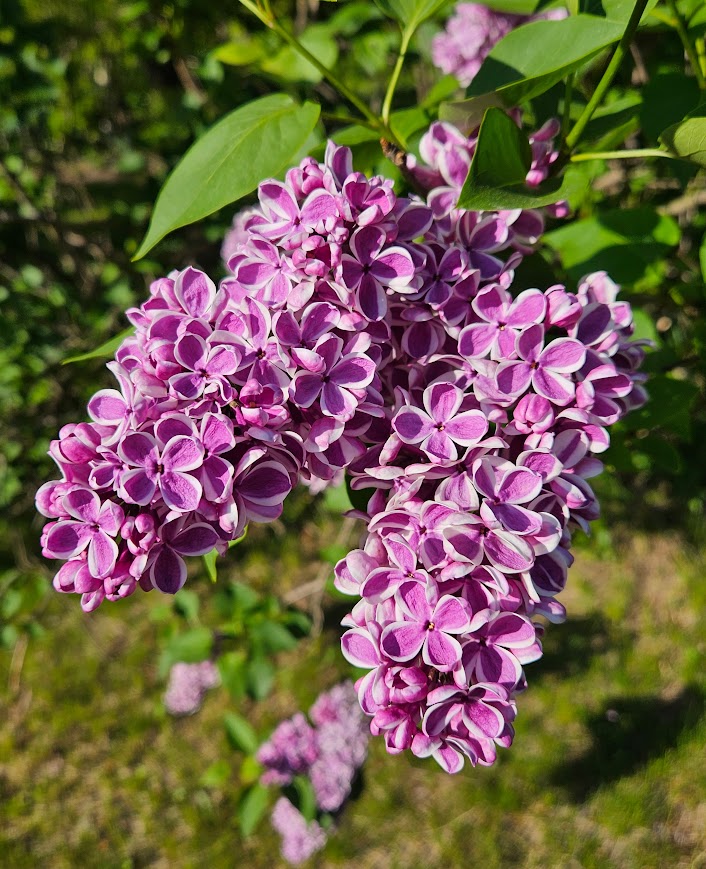
A true delight in my garden is the Sensation Lilac. This lovely lilac has deep purple buds opening to a display showing each petal completely outlined in white. This two-tone coloration is so unexpected! And its lovely lilac scent is so delightful. This shrub is always a favorite of everyone who sees it!


Growing up in the upper Midwest, I remember lilacs being a staple of many home landscapes. Gracing farmhouses and urban homes alike, these shrubs are long-lived in the landscape and require very little maintenance. With many dwarf varieties available, lilacs can fit into any home landscape. Cascading over rock walls, or planted en masse to form a hedgerow, enjoying these fragrant blooms is a delight in the springtime. 


A visit to the Madison Arboretum and their expansive lilac plantings is all it takes to fall in love with these beauties. The Longenecker Horticultural Gardens offer a dazzling springtime display with so many varieties, and so many scents! I dive into the blossoms head first, absorbing their heavenly aroma. I really can't get enough of their heady perfume.


Swallowtail butterflies are so attracted to my Sensation lilacs. One year I had a visitor that stuck around for a little photo shoot. Constantly flitting around from blossom to blossom, I delighted with watching this beautiful butterfly on my bushes. 


Lilacs are pretty much care-free as far as plant maintenance. You will only need to remove the spent flower clusters once they're done blooming, and trim out any dead branches. These multi-stemmed, deciduous shrubs spread through shoots sent out from their root systems, expanding some plants into large clusters.


Botanical name: Syringa vulgaris
Common name: Common Lilac
Family: Oleaceae -- The Olive family

Interesting fact: The botanical name of lilac, Syringa (suh-RIN-gah), is from the Greek word syrinx, meaning tube. The flower clusters are made up of many little individuals flowers, each with a tubular center.

Lilacs grow best in full sun. Always consider the mature size of the plant when choosing a planting site. 

Pruning: Lilacs produce flowers on last year's wood. Pruning too late in the season will remove next year's flowers. Don't do it!

*Pro tip: For very large, overgrown clusters of lilacs that appear to be diminishing in the number of blossoms they produce, a good rule for pruning is to remove the oldest canes over a 3-year period, to gradually allow the plant to recover and grow new shoots. 

Share your love of lilacs in the comments. Any questions about growing lilacs? Let me know. 

Happy gardening, everyone! 💜

Bowman's Root - Delicate Beauty in the Shade Garden


Native to Missouri, Bowman's Root (Gallenia trifoliata) is a delightful perennial plant. Although it appears to grow as a woody shrub, its branches die back to the ground each winter, and new sprouts appear in spring. Growing to about 3' tall in my garden, with about an equal spread, these plants have a woody root system. They thrive in the edge of the woodland shade garden, requiring at least part-time shade. 

I love the delicate look of the Bowman's Root, and how it gently moves in the breeze. The tiny one-inch, five-petaled flowers arrive in early summer, and while they bloom for only a short time, they are enchanting, especially planted en masse. This ethereal quality is the reason I wanted to surround my angel statue with these blooms. Here she is, in a sea of flowers, with the late afternoon sun adding its soft light. The over-arching branch, with all the shades of pink, is a Carnival Weigela. This is another absolute favorite of mine, and I will tell you more about this lovely flowering shrub in another post.


Bowman's Root also pairs strikingly with my pink peonies. The dark bark of the Black Cherry tree is a lovely backdrop for these early summer bloomers in my garden.

Even after the blooms have faded, the foliage of the Bowman's Root adds wonderful texture to the garden. Its trifoliate leaves hug the stems, which develop a red coloration that is a lovely contrast to the bright green leaves. The arching branches move softly with the breezes through the shady garden all summer long.

Funny story about my Bowman's Root... One day I was at the garden center and fell in love with these delightful plants, and purchased 3 of them to add to my garden. I had to laugh at myself when I came home and approached the garden bed to lay out the new plants, because there, right in front of me, was a specimen plant of Bowman's Root that I had planted the year before. There it was, blooming happily in my garden!  Well, at least I know what I like! 


If you're looking to add a lovely "filler" shrub for the middle of the garden bed, check out these delightlful perennial plants. You will enjoy their beauty for years to come. Here are the basics:


Common Name: Bowman's Root; Indian physic
Botanical Name: Gallenia trifoliate (formerly Porteranthus trifoliatus)
Type: Herbaceous perennial
Family: Rosaceae
Native Range: Eastern North America
Zone: 4 to 8
Heght: 2 - 4'
Spread: 1.5 - 3' 
Bloom Time: Early summer
Bloom Description: White (can be pale pink)
Light: Part shade
Water: Medium

Happy Gardening, everyone! 🌱