Pages

Showing posts with label Colleen Reske. Show all posts

Winter 'Indoor Gardening'

What can you do when you are an avid gardener and it's the middle of winter? Grow indoors, naturally! 

One way is to grow houseplants -- of which I have many! They brighten our interior spaces and provide life and beauty, even when nothing is green and growing outside.

Living in southeastern Wisconsin through the long winter months, my heart aches to see the green canopy of our maple trees in summer, and to hear the buzzing of bees and hummingbirds while I am out in my yard. 


Now instead, our living room hosts the greenery, with some very tall Ficus trees, their slightly smaller offspring, and a towering corn plant. We also have several large Norfolk Island Pine trees -- all of which were originally bought over the years as tiny decorated trees at Christmastime.

Adding to these larger specimens are the numerous pothos plants that are climbing and trailing everywhere, various cacti and spider plants, and all of their babies. Visitors will say that our living room looks like a 'jungle', but I liken it more to that of a calming forest. :)

Happy Basil Plants in the Sunshine
Beyond our numerous houseplants, I have attempted to bring some outdoor plants into the house at summer's end, and have grown them on sunny windowsills with some success. Not all plants will transition to interior spaces after living outdoors, but I try to bring in some of my herbs and plants that are still growing late in the fall, before the first frost gets to them, so that I can enjoy them for a little longer. 

I have had limited success with transitioning basil plants to indoor living. The plants may survive for a brief period indoors before succumbing to an untimely end. This year, it was aphids.

My conclusion? Basil is probably best started from seed indoors, rather than moving plants inside after growing outside all summer. 

This year I had copious amounts of baby kale plants that were still going strong late in the season. I love to peel the lower leaves off of these small plants to add to my salads and sandwiches, and have added them to soups and stir-fries, too! So, even though kale does well in the colder temps, I wanted to bring these plants inside before the deep freeze of winter came.

The curled kale and curled parsley seem to be thriving this year in my interior spaces. I've recently added a grow light to aid them in optimum growth, as our unbelievably endless gloomy days continue. I am sitting under a full-spectrum light as I write, to ward off SAD, which is a real thing for us northerners. 

Winter Indoor Garden 2026

Just a couple of days after using the extra lighting for the kale and parsley, I noticed that aphids were beginning to take over some of the plants. 

I researched whether it is safe to use neem oil on edible foods, and since it will be more than a few days before I harvest any kale, and as long as I wash off the leaves with water to remove any residual oil and soap (mainly for taste) then I am safe to use the neem oil on these plants. 

Mixing a few drops of soap and the neem oil, diluted with water, I used a heavy spray on these plants; and so far it seems to have helped the aphid (and the fungus gnat!) problems already. Further applications will be used to assure the aphids have been eradicated -- or I may resort to taking each plant and rinsing the foliage under running water in the sink. Those sucky aphids like to hang out under the leaves, and with these curled kale leaves, that's a lot of hiding places -- and it's difficult to spray under the leaves! 

Lettuces Grown in 2020

The best part about growing an indoor garden is eating your own fresh greens in the middle of winter. Soon I will start some lettuce and spinach seeds. Greens are easy and fast to grow, especially since I love to harvest and eat them as baby greens. 

I hope these glimpses into my wintertime gardening inspire you to add some greenery to your interior spaces! Until I get a greenhouse, my sunny windowsills will have to do, and honestly, our indoor forest -- or jungle -- seems to growing just fine. Wishing you happy 'indoor' gardening! 


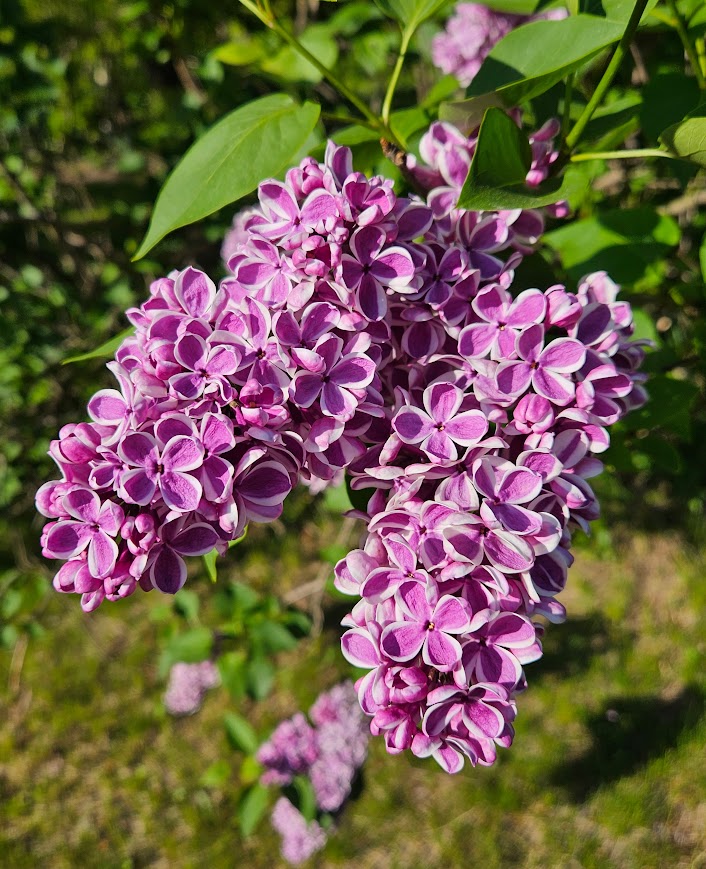
Lilacs - Fragrance for Days!

I remember walking home from school through the alleyways in the springtime. Lilacs would be blooming everywhere, and I would take armfuls of them home to my momma, knowing they were her favorite flower. 

Their exquisite fragrance makes them my favorite, too! When their heavenly aroma wafts through my yard, I know that spring is finally here, and that summer is just around the corner!


A true delight in my garden is the Sensation Lilac. This lovely lilac has deep purple buds opening to a display showing each petal completely outlined in white. This two-tone coloration is so unexpected! And its lovely lilac scent is so delightful. This shrub is always a favorite of everyone who sees it!


Growing up in the upper Midwest, I remember lilacs being a staple of many home landscapes. Gracing farmhouses and urban homes alike, these shrubs are long-lived in the landscape and require very little maintenance. With many dwarf varieties available, lilacs can fit into any home landscape. Cascading over rock walls, or planted en masse to form a hedgerow, enjoying these fragrant blooms is a delight in the springtime. 


A visit to the Madison Arboretum and their expansive lilac plantings is all it takes to fall in love with these beauties. The Longenecker Horticultural Gardens offer a dazzling springtime display with so many varieties, and so many scents! I dive into the blossoms head first, absorbing their heavenly aroma. I really can't get enough of their heady perfume.


Swallowtail butterflies are so attracted to my Sensation lilacs. One year I had a visitor that stuck around for a little photo shoot. Constantly flitting around from blossom to blossom, I delighted with watching this beautiful butterfly on my bushes. 


Lilacs are pretty much care-free as far as plant maintenance. You will only need to remove the spent flower clusters once they're done blooming, and trim out any dead branches. These multi-stemmed, deciduous shrubs spread through shoots sent out from their root systems, expanding some plants into large clusters.


Botanical name: Syringa vulgaris
Common name: Common Lilac
Family: Oleaceae -- The Olive family

Interesting fact: The botanical name of lilac, Syringa (suh-RIN-gah), is from the Greek word syrinx, meaning tube. The flower clusters are made up of many little individuals flowers, each with a tubular center.

Lilacs grow best in full sun. Always consider the mature size of the plant when choosing a planting site. 

Pruning: Lilacs produce flowers on last year's wood. Pruning too late in the season will remove next year's flowers. Don't do it!

*Pro tip: For very large, overgrown clusters of lilacs that appear to be diminishing in the number of blossoms they produce, a good rule for pruning is to remove the oldest canes over a 3-year period, to gradually allow the plant to recover and grow new shoots. 

Share your love of lilacs in the comments. Any questions about growing lilacs? Let me know. 

Happy gardening, everyone! 💜

Bowman's Root - Delicate Beauty in the Shade Garden


Native to Missouri, Bowman's Root (Gallenia trifoliata) is a delightful perennial plant. Although it appears to grow as a woody shrub, its branches die back to the ground each winter, and new sprouts appear in spring. Growing to about 3' tall in my garden, with about an equal spread, these plants have a woody root system. They thrive in the edge of the woodland shade garden, requiring at least part-time shade. 

I love the delicate look of the Bowman's Root, and how it gently moves in the breeze. The tiny one-inch, five-petaled flowers arrive in early summer, and while they bloom for only a short time, they are enchanting, especially planted en masse. This ethereal quality is the reason I wanted to surround my angel statue with these blooms. Here she is, in a sea of flowers, with the late afternoon sun adding its soft light. The over-arching branch, with all the shades of pink, is a Carnival Weigela. This is another absolute favorite of mine, and I will tell you more about this lovely flowering shrub in another post.


Bowman's Root also pairs strikingly with my pink peonies. The dark bark of the Black Cherry tree is a lovely backdrop for these early summer bloomers in my garden.

Even after the blooms have faded, the foliage of the Bowman's Root adds wonderful texture to the garden. Its trifoliate leaves hug the stems, which develop a red coloration that is a lovely contrast to the bright green leaves. The arching branches move softly with the breezes through the shady garden all summer long.

Funny story about my Bowman's Root... One day I was at the garden center and fell in love with these delightful plants, and purchased 3 of them to add to my garden. I had to laugh at myself when I came home and approached the garden bed to lay out the new plants, because there, right in front of me, was a specimen plant of Bowman's Root that I had planted the year before. There it was, blooming happily in my garden!  Well, at least I know what I like! 


If you're looking to add a lovely "filler" shrub for the middle of the garden bed, check out these delightlful perennial plants. You will enjoy their beauty for years to come. Here are the basics:


Common Name: Bowman's Root; Indian physic
Botanical Name: Gallenia trifoliate (formerly Porteranthus trifoliatus)
Type: Herbaceous perennial
Family: Rosaceae
Native Range: Eastern North America
Zone: 4 to 8
Heght: 2 - 4'
Spread: 1.5 - 3' 
Bloom Time: Early summer
Bloom Description: White (can be pale pink)
Light: Part shade
Water: Medium

Happy Gardening, everyone! 🌱

A Sweet Look at Meyer Lemons


A few summers ago, I was gifted a pair of dwarf Meyer Lemon trees. Despite a battle with brown scale, they thrived outdoors in summer and wintered in my kitchen. Their incredibly fragrant blossoms would yield a continuous harvest of sweet, juicy lemons enjoyed throughout the seasons.

These diminutive, shrub-like trees were so enchanting! They can sport pink buds, fragrant white blossoms, and varying degrees of maturing fruit on them -- all at the same time. A very unique characteristic!

Meyer lemons are a cross between lemons and mandarins. If you haven't tasted their fruit and juice, you really should. A sweeter lemon you will not find, and these are surely a treat! Don't worry, they still have their lemony sourness. It's just more balanced and less acidic, with a gentle sweetness that is so unique!

We enjoyed many seasons as my plants grew, indoors and out. My dwarf Meyer lemon trees were only about 2 1/2' x 2 1/2', with only minor pruning, making it easy to bring them back indoors when they would otherwise freeze outside in our Zone 4 winters. They soaked up the sun in south facing windows during their indoor stay, and continued to produce fruit. All in all, they had a good life and yielded many delights that everyone enjoyed.

Sadly, my battle with the brown scale eventually resulted in me throwing the plants onto the compost heap in the middle of winter. I had finally had enough! I did receive some complaints -- from those who were not fighting the brown scale war with me, mind you. I know I made the right decision, after too many seasons of cleaning up the sticky honeydew left behind -- on everything!

I do plan to grow some new lemon trees, hopefully minus the scale issue. It is such a treat to enjoy their fragrant gifts. There's nothing like harvesting their fresh fruit in my kitchen, with a snowy scene just outside my window. 


So enjoy this glimpse of summer sunshine, these golden globes of goodness that were a delight to grow. Thinking of their deliciousness makes me want to create a lemon curd... mmmmmmm. Anyone have a vegan recipe?

What Happened to Summer?

Close-up of Verbena, one of my favorite summer annuals
How is it possible that summer has come and gone, and I haven't gotten to share my gardens with you? Oh yeah, I run a landscaping business and a busy household. No excuses! So I'll start by sharing some pictures here.

I would be willing to bet that you will agree with me that SUMMER WENT TOO DARNED FAST!! 

While I hold onto my impatiens as long as I can and keep watering petunias that I should have let go long ago, my tomato plants continue to produce bounty, and we keep enjoying it!


'Nora Leigh' Phlox
These last few days have been absolutely gorgeous, the kind of September that Wisconsinites dream about. The sun brings heat through blue skies, but you don't have to look far to see Autumn creeping in. Tinges of yellows and even reds are beginning to peek through, though for the most part we still savor our green palette of summer adorning the tree-covered hills. This soon will change.

The forerunners of color-change are already among us, and there's no turning back. Many of the ash trees on our property have already lost their leaves. They're always early to lose leaves and late to leaf out. That's just their style. But the crunch on the driveway lets me know that the inevitable change of seasons is here, so we might as well embrace it. 

I've always loved Fall. As a little girl, the smell of Fall brought the crunch of leaves and made for a fun season. I loved raking leaf piles and jumping into them, and then laying in the warm sun, letting my imagination take me far away.


I still love Fall, but with the maturity of many seasons behind me, I know that the beautiful hues of Autumn lead to the snow and cold of winter. Not that I mind winter. It's just that it LASTS TOO DARN LONG in Wisconsin. But I digress...

Savor the season you are in.  

Summer glided by on the wings of butterflies and hummingbirds, but as Autumn approaches, we now ride the winds of change.

Change can be for the better, or sometimes for the worse, but one thing is for certain. Nature guides us in displaying that change is a constant in our lives, and we had better learn to go with the flow. Hopefully, our transitions may lead us into new beginnings.

Somewhat reluctantly, I will bring out a few Fall accents to decorate our home. But first, I have a bird bath to clean and plants outside that still require regular watering. 


I hope you are enjoying these last days of our summer-turned Autumn. The promise of pumpkin pies and apple cider and nights around a fire sound inviting, but for now, my rose bush is still blooming and soaking up the sun. Therefore, so am I. 

Anemone: Fall Blooming Beauty


Summer is over, way too soon, in my opinion. Usually by now I'm ready for falling leaves, cleaning up the gardens, and preparing for winter. But this year's odd summer weather has left me wanting more, and I'm being dragged kicking and whining into autumn this year.


One bright spot of joy in my garden is this sweet little Anemone. I added three of these plants to complete an "edge of the woodland shade garden", one of my favorite designs, (although this one is actually right up against my house!)


Though this garden is on the west side of my house, it is heavily shaded and receives only a brief time of direct sun each day. 
 

The Anemone holds its flowers high on sturdy stalks. Each flower measures only an inch or two, but the plant is floriferous and as it matures will bear many flowers each season. 


I chose most of the plants in this shade garden for their foliage, though all of them flower at some point - a bonus! However, the anemones were planted with flowers in mind, fall flowers, mind you, at a time when everything else is fading away.

I love their cheery little faces, and as the plants grow, I think this will be a highlight of my new shade garden.


This Anemone is rated for zone 5 hardiness, meaning that if we experience a really frigid winter (below -20), these plants may not survive. Planting them in a protected area, such as in this garden next to the house, will help to assure they make it to the next season.


Here are the facts:


Scientific name: Anemone x hybrida 'Pamina'

Common name: Windflower, Japanese Anemone

Family: Ranunculaceae

Hardiness: Zone 5-9


Light Requirements: Sun to Part Shade

Height: 24-36"

Width: 24"

Blooms in late summer or early fall.

Resistant to deer and rabbits! 


Just one more note:  I though you might like to see my Limelight hydrangea in the fall. The flowers have turned nearly all pink, and are still darkening in their color. This plant is enjoyable in all seasons!


Limelight Hydrangea: My Favorite Flowering Shrub

My Limelight Hydrangea is truly one of my fav's! I wait all summer for the blooms, and they are gorgeous!

The bloom size is amazing! And even with summer's torrential downpours, the plant continues to hold its giant blooms upright.


Even though Limelight is a relatively late bloomer in my garden, I don't mind the wait. With these beautiful blooms in late summer, Limelight is a shining star in my garden.


The blooms emerge with a soft, lime green tint, hence their name, and open fully to a pure white.


This photo shows how large the blossoms can get - they engulf my hand! The blooms are easily 6-8" long. Though they have only a very slight fragrance, they delight me with their little florets combining to make these large blossoms.


The fluffy blooms last for many weeks, gradually turning a pinkish hue. The blossoms can be cut and dried, though I often leave them on the plant even into the winter months. Sometimes old blossoms look like tiny tumbleweeds as they are blown across the snow-packed ground. 


There is relatively no maintenance with this beautiful shrub. The only pruning necessary is to remove any dead wood, which there seldom is. 

You could trim off the old flowers after summer if you desired to. And if you like to dry the blossoms, you can remove them at any time.


This cheery plant is a stand-out in the garden. Give it plenty of room to grow, and water it regularly until it is established, and in times of drought, especially when the flower heads are forming. Limelight does like to have evenly moist soil, so mulching the root zone is a great idea. This hydrangea will never fail to bring beautiful blooms long after most other plants have finished blossoming. Hummingbirds and bees enjoy the blossoms, too!

NOTE: Limelight (paniculata) hydrangeas differ from the mophead (macrophylla) hydrangeas many are familiar with. Mopheads include Annabelle and Endless Summer, two of the most commonly used  hydrangeas in the midwestern landscape. The leaves of paniculata are smaller, and the bloom time is much later in summer. Both types deserve a place in the garden!

Scientific name: Hydrangea paniculata 'Limelight'

Common name: Limelight Hydrangea

Family: Hydrangeaceae

Zone: 4-8

Light requirements: Full Sun to Partial Shade

Height: 6-8'

Spread: 6-8'

Bloom time: Mid-late summer through mid-fall

Caveats: Some parts of the plant may be poisonous if ingested. So, don't eat it. Simple as that. 

Sunshine Yellow: Rudbeckia 'Indian Summer'


Such a cheery face! How could you not love this bright as sunshine flower? The blossoms of Rudbeckia 'Indian Summer' have just started blooming in my garden!


This sun-loving plant sports bright blooms 3-5" in size, and each blossom lasts for many weeks. They keep on blooming and brightening up the garden all summer long!


The centers start out smooth and reddish, and become softer and dark brown after the stamens open.


Bumblebees love to perch and drink nectar from these happy plants, and they help to spread the pollen.


This variety is known to move about the garden, but doesn't form dense colonies like other Black-eyed Susans (Rudbeckia species). 

'Indian Summer' may be considered a biennial, or a short-lived perennial. The plants may last for a a year or two, but they reseed freely and I'm glad to see I have some blooming in my garden again this year.

In my garden, my plants stayed in the same place for a couple of years, but they didn't make it through this last winter.

However they have reseeded and relocated themselves elsewhere in my garden, and where they are blooming now works beautifully! I couldn't have done a better job myself!


I enjoy seeing their bright faces when I walk by my garden. Their bright color, large flower size and each flower's longevity in the garden make this a perennial not to be without!


 Here are the facts:

Scientific name: Rudbeckia hirta 'Indian Summer'

Common name: Black-eyed Susan

Family: Asteraceae

Zone: 3-7

Light requirements: Full Sun

Height: 2-3'

Spread: 1-2'

Bloom time: June thru frost

Tolerant: Deer, drought and clay soil


Here's a picture of 'Indian Summer' in my garden last year, blooming with my Star-gazer lilies and Summer Phlox. Isn't this a lovely palette of color?


Weigela 'Red Prince': Show Stopping Color


Today's spotlight is on my Weigela 'Red Prince' which is in its full-blooming glory. This gorgeous deciduous shrub is one of my fav's, and is often used in my landscape designs.

Red Prince is a showy plant when in bloom, and rather quiet during the rest of the season. Its tubular flowers attract hummingbirds and bees, and for brief time in the spring, it is an absolute stand out in the garden.


Red Prince has a form that is irregular, and I like it that way. I have seen some specimens pruned into a perfect mounding shape, but it's not natural for the plant, so therefore it's not my preference. Some minor pruning of long, overgrown canes is the only shaping I perform.


The delicate flowers appear in abundance, and this year the show is spectacular! Each tiny flower is dressed in crimson, with white anthers and pistils. Absolutely gorgeous!


Clusters of flowers appear on every branch, from top to bottom. This plant is quite floriferous, and the abundance of flowers this season is causing the branches to bend just a little. The display is jaw-dropping!

Red Prince pairs well with other flowering shrubs. Behind and to the left, my very tall 'President Grevy' lilac has finished blooming, and directly behind the weigela is my 'Blue Muffin' Viburnum in full bloom.

To the side are spirea for early summer bloom, and on the other side of the bed I have summersweet (Clethra alnifolia) for mid-summer color and a wonderful fragrance. So you see, in a bed approximately 14' square, I have something blooming nearly all season long!


I knew everyone would wonder what was blooming behind the Weigela, so today is a two-fer because the Blue Muffin Viburnum is another of my fav's, also used in my landscape designs. Are you seeing a pattern here? Indeed, I like to grow the plants that I offer to my customers for their gardens. That way, I have an idea of how they grow and how well they thrive in our area.

Viburnums in general are one of my favorites, and Blue Muffin is a sweet, smaller specimen. Those adorable white flowers are followed by bright blue berries. I wouldn't bake with them, but the birds love 'em!


I find great delight in the delicate beauty of the blooms of my Red Prince Weigela. The shrub can be a bit ungainly, but certainly deserves a place in the deciduous shrub border.


Here are the facts:

Botanical name: Weigela florida 'Red Prince'

Common name: Red Prince Weigela *


Hardiness: Zone 4 - 8

Height: 5' - 6' tall

Spread: 5' - 6' wide

Flowering time: late spring/early summer with another, less abundant bloom late in summer

Location: Full sun is recommended, but my plant is situated in full morning sun with deep shade all afternoon and still flowers profusely.


* Weigela is pronounced Wy gee la; with a soft 'g' sound (like a 'j'). Some people pronounce it with a hard 'g' sound. Some add an extra 'i' and say wy gelia. However you wish to pronounce it, this stunning shrub deserves a place in the landscape as a specimen plant. When in bloom, it is drop-dead gorgeous!